Marine Fire Inspections for Captains and Crews
Marine Fire Protection Palm Beach works with captains and vessel crews coordinating fire-equipment inspections throughout Palm Beach County. Crew members can identify protected spaces, prepare safe access, provide previous records and explain vessel scheduling restrictions.
Prepare Palm Beach County Machinery Spaces for Inspection
Captains and crews can support inspection by confirming access, locating records and identifying every protected machinery space. Cylinders, controls, service tags and discharge components should remain in their existing condition.
Do not activate a fire suppression system, pull a manual release or alter equipment merely to prepare for service. Report access restrictions or visible concerns instead.
If other work is underway aboard the vessel, identify tasks that affect entry to the enclosure or safe inspection of presented equipment. Requests may cover engine-room, generator-space and portable-extinguisher equipment.
List the engine room, generator room and any other machinery compartment independently. Photographs should be labeled so each cylinder and control arrangement can be matched to the correct enclosure.
Portable extinguishers need a separate onboard inventory. Keeping equipment separated by protected space helps the crew present clear information for marine fire inspection coordination.
Preparing vessel access and equipment details before an inspection?
Coordinate Crew AccessProvide Operational Context for the Vessel
State whether the vessel is in normal use, ashore, undergoing a refit or preparing for departure. Include facility procedures and the person responsible for access.
Identify Protected Spaces
Identify the engine room, generator room and every other machinery compartment that contains presented fire-equipment components. Treat each protected space as a separate part of the vessel inventory.
Share Current Vessel Status
Let the service coordinator know whether the vessel is operating normally, ashore, in refit or preparing to depart. Scheduling restrictions and facility procedures are useful context.
Name the Access Contact
Provide the marina, boatyard or private-waterfront location and identify the responsible crew contact. Customers remain responsible for vessel and facility authorization.
Keep Equipment Separate
Distinct systems, cylinders, controls and protected enclosures should stay clearly separated in the vessel’s information. One broad fire-equipment entry may not show which components belong to each space.
For machinery-space equipment, review machinery-space inspections before submitting vessel details.
Maintain Clear Vessel Fire Records in Palm Beach County
Crews should retain completed service information with the relevant equipment files. Separate documents by system and protected space rather than relying on one broad fire-equipment entry.
Keep System Records Together
Completed service information belongs with the relevant system and equipment files, organized so the corresponding protected space is clear.
Include the Original Request
When service follows a request from an owner, manager, surveyor or insurer, provide that original wording with the equipment details.
Identify Record Recipients
Tell the coordinator where completed information should be directed and who should receive it after the inspection.
Use Records as Private Documentation
Private inspection records do not constitute Coast Guard approval, a marine survey or guaranteed insurance acceptance.
Clear records connect each system and protected space to the service information provided.
Prepare marine fire inspection records before the vessel visit.
Prepare Inspection RecordsWhat Captains and Crews Can Report Before an Inspection
A useful service request identifies the vessel location, responsible contact, protected spaces, equipment list and any operational restrictions affecting safe access. This gives the inspection coordinator the context needed to plan around the vessel’s current use.
Access Restrictions
Report restrictions affecting entry to an engine room, generator space or other enclosure. Also identify other work underway that could affect safe inspection of the presented equipment.
Visible Concerns
Describe unexpected indicator changes, visible damage, inaccessible controls or a reported activation. Do not reset, operate or otherwise troubleshoot the equipment merely to prepare for service.
Equipment Identification
Provide an equipment list and label photographs by protected space when safe. This helps match cylinders and control arrangements to the correct enclosure.
Vessel Operations
State whether the vessel is in normal use, ashore, undergoing a refit or preparing for departure. Include the person responsible for access and any facility procedures.
Captains and crews coordinate marine fire protection inspections throughout Palm Beach County. For related service information, see yacht fire protection and vessel inspections at marinas and boatyards.
Coordinate Inspection Access With Vessel Operations
Vessel operations, departure planning, refit activity and facility procedures can all affect access to machinery spaces. Share this context when requesting service so the responsible contact and inspection conditions are identified.
The crew does not need to change a marine fire suppression system to prepare for inspection. Maintaining the existing condition and reporting relevant restrictions or concerns is the appropriate starting point.
If the vessel is ashore or undergoing a refit, identify work that affects access to the enclosure or safe inspection of equipment. If the vessel is preparing for departure, include that scheduling restriction in the request.
A marina, boatyard or private-waterfront location should be provided with the responsible crew contact. Customers remain responsible for vessel and facility authorization.
For direct coordination, call with the vessel location and equipment list.
Marine Fire Inspection Services for Vessel Crews
Marine Fire Protection Palm Beach coordinates vessel-specific service evaluation and inspection requests for equipment presented aboard the vessel. Share the protected spaces, equipment details, access conditions and relevant records with the request.
Marine Fire Suppression Systems
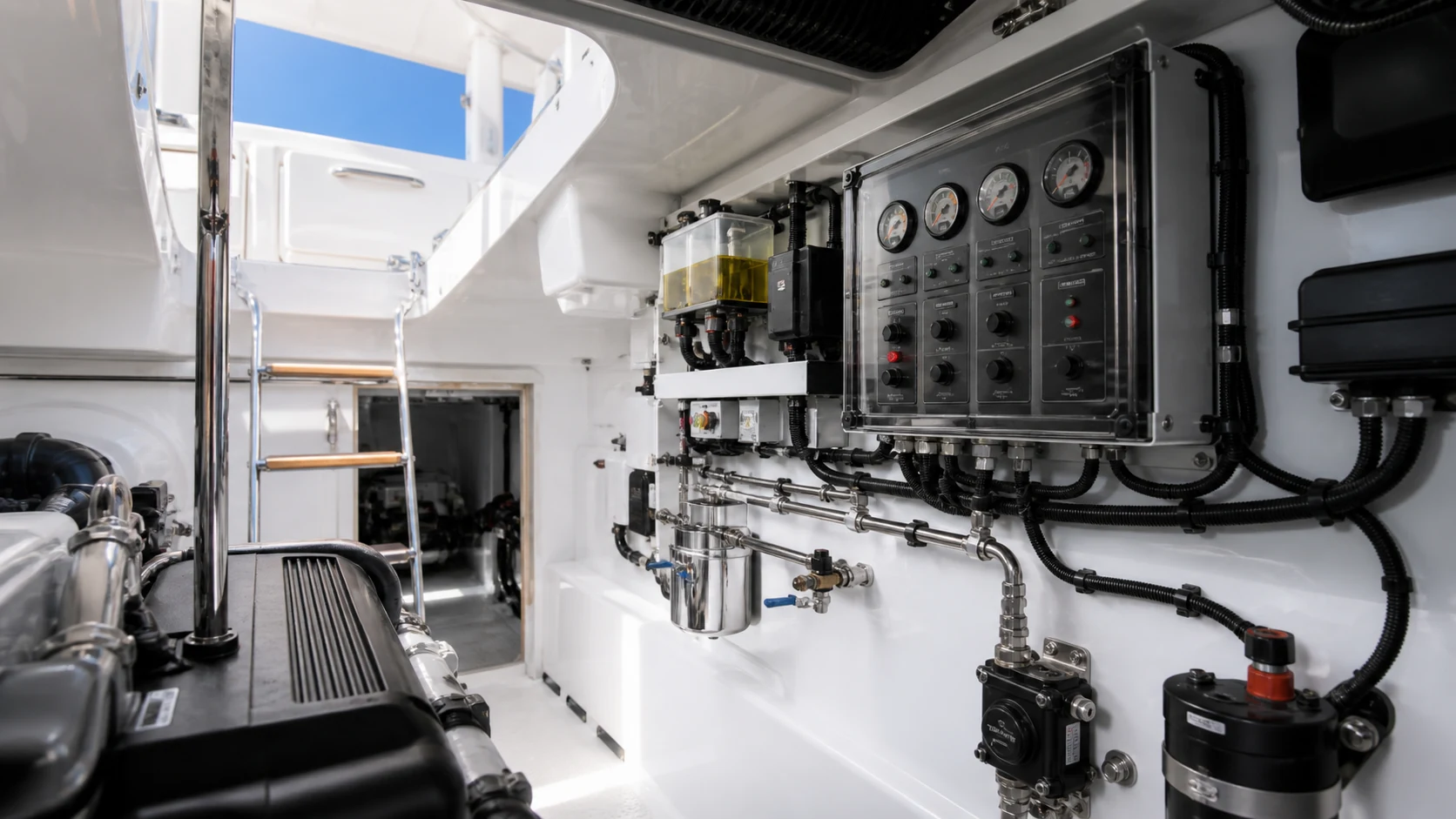
Coordinate an inspection request for marine fire suppression system equipment and provide the vessel’s protected-space information.
View service →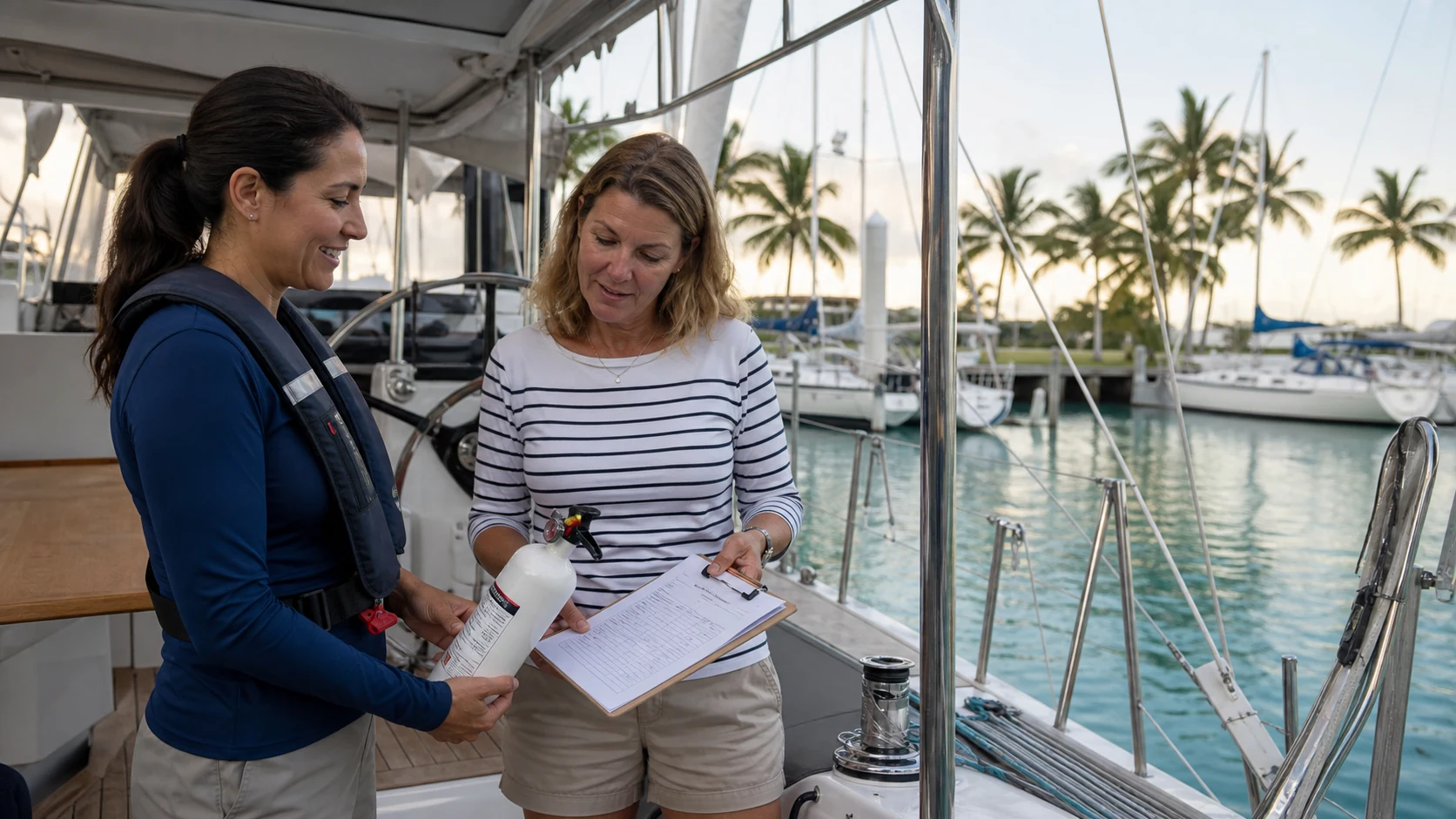
Yacht Engine Rooms
Provide engine-room access details, equipment identification and previous records for a yacht engine-room fire suppression inspection request.
View service →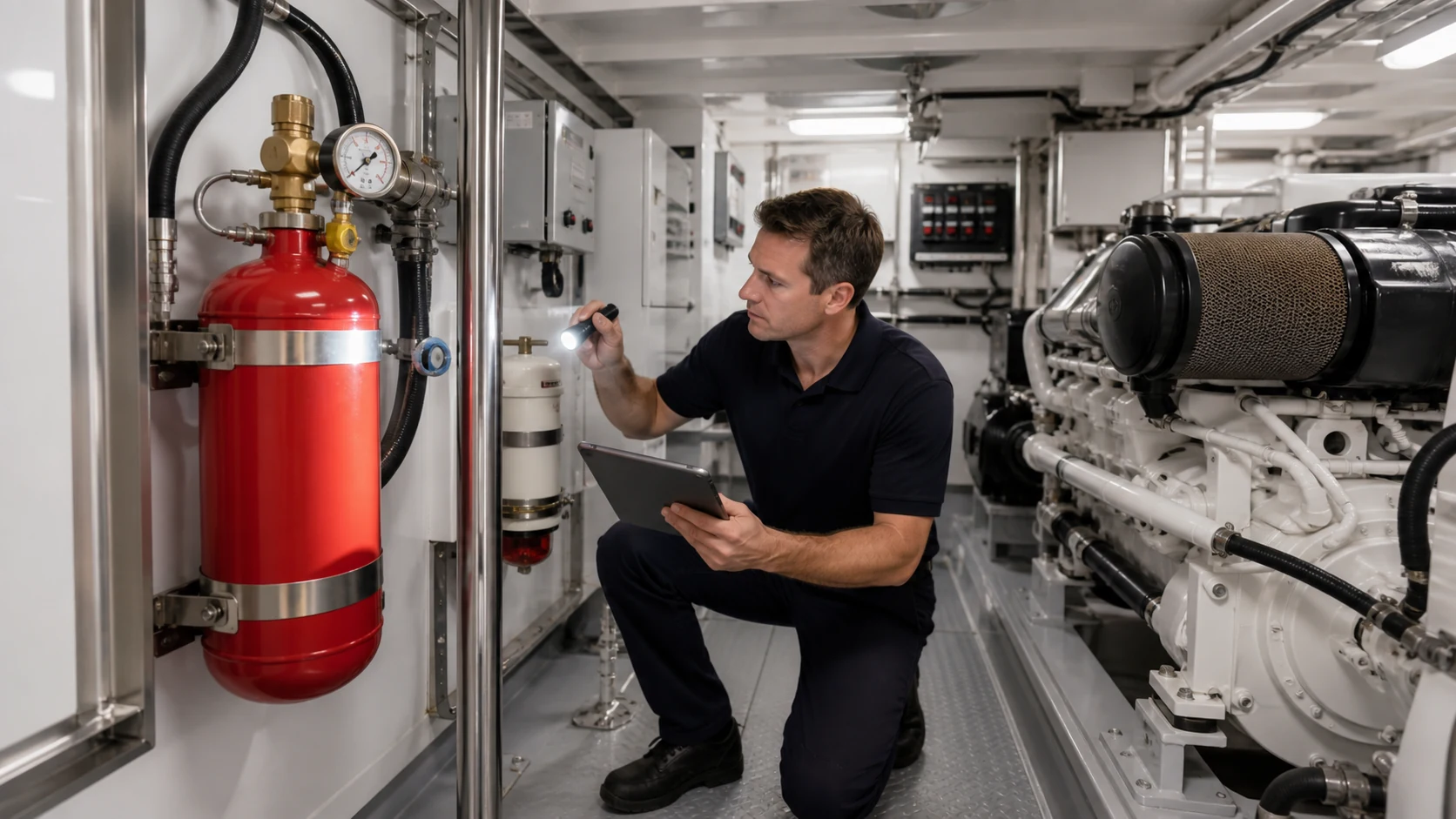
Boat Fire Suppression Systems
Coordinate vessel access and identify the protected spaces and fire suppression system equipment presented for inspection.
View service →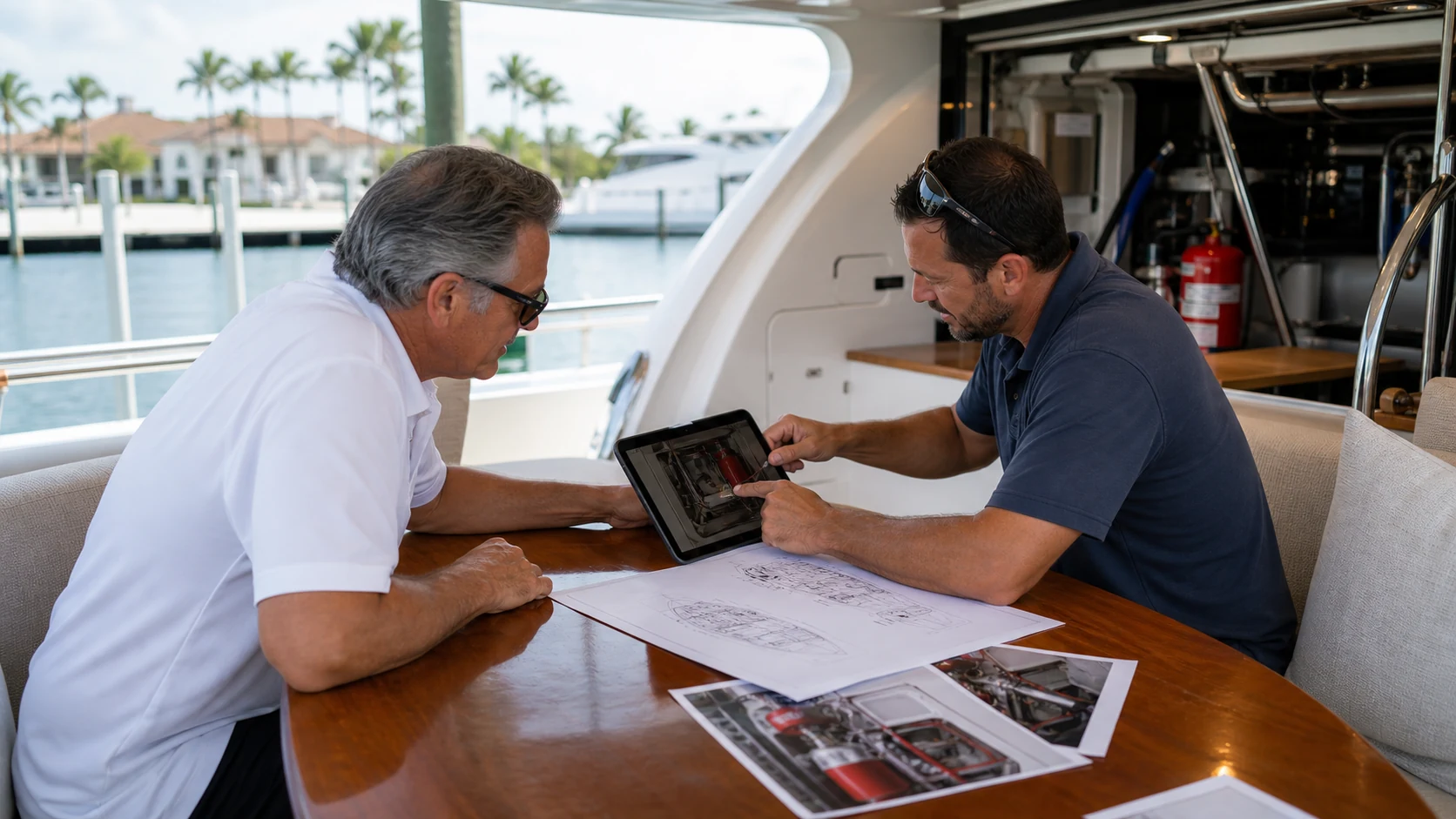
Generator Rooms
List generator-space equipment separately and identify access conditions affecting inspection of that protected enclosure.
View service →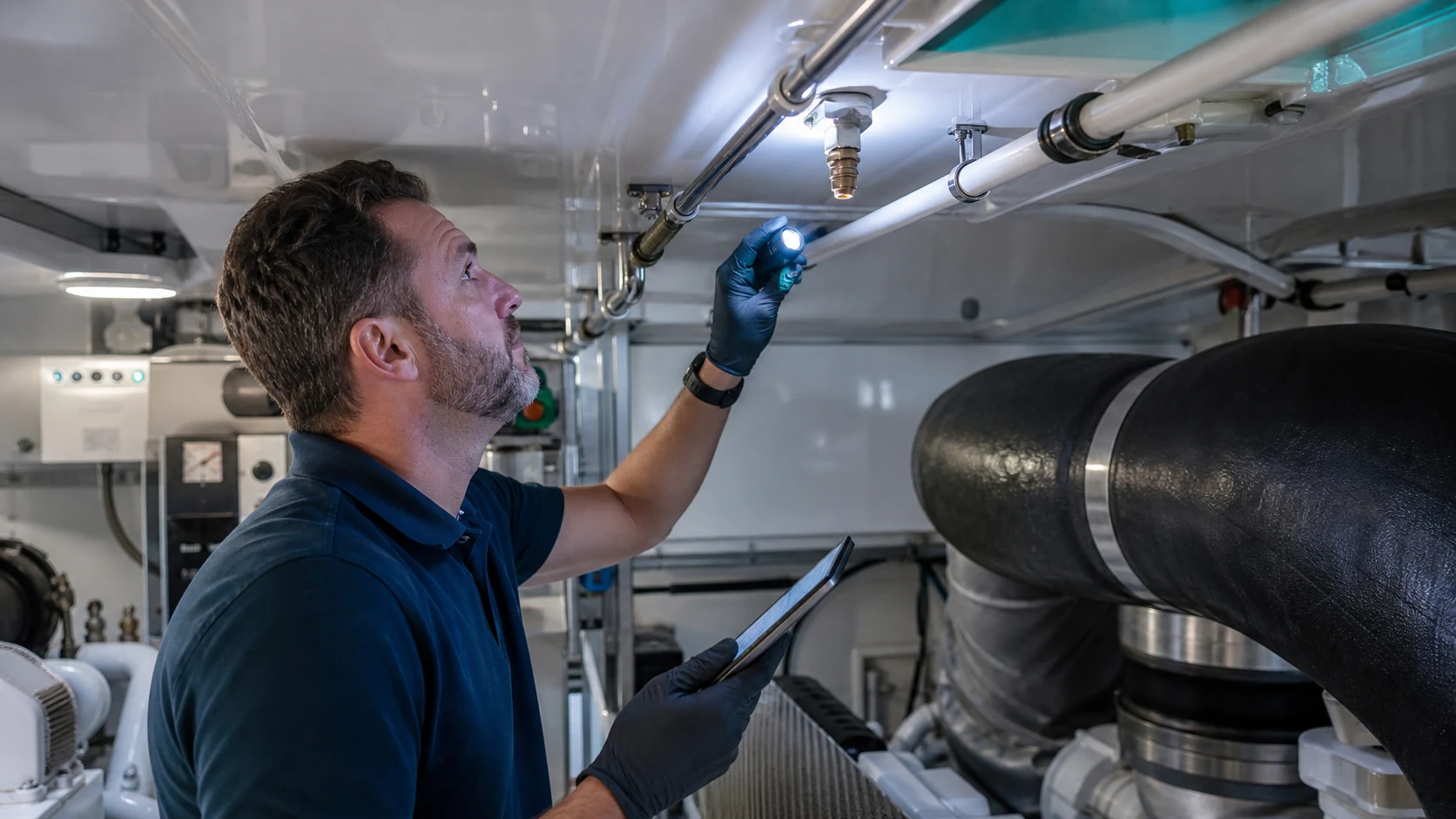
Marine Fire Extinguishers
Maintain a separate onboard inventory for portable extinguishers when providing vessel equipment details.
View service →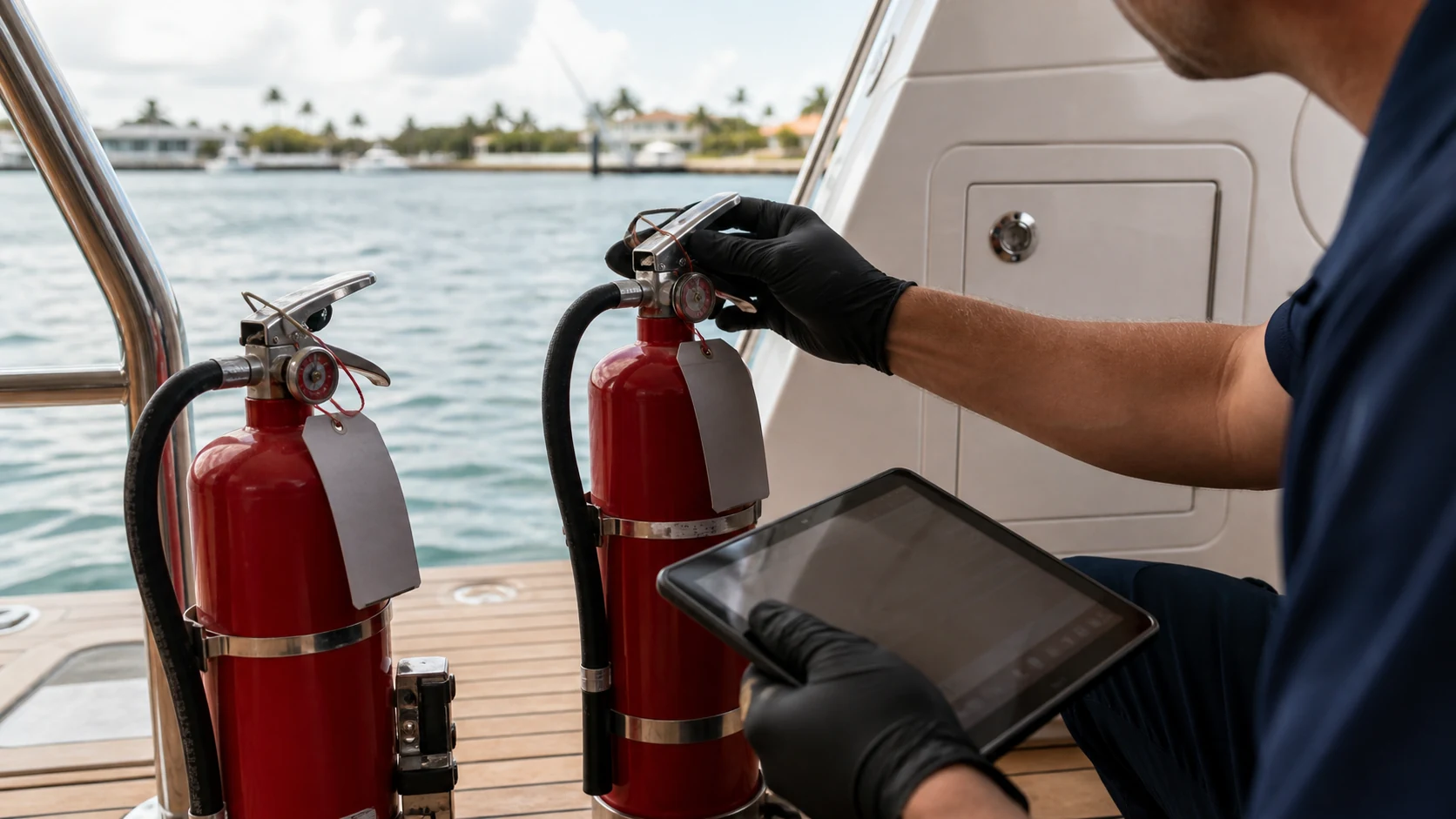
Machinery-Space Equipment
Identify each machinery compartment independently so cylinders, controls and discharge components can be matched to the correct enclosure.
View service →Captain and Crew Service FAQs
Marine fire inspection records are private service information. They do not constitute Coast Guard approval, a marine survey or guaranteed insurance acceptance. When a surveyor, insurer, owner or yacht manager requested service, include the original wording and identify where completed information should be directed.
Coordinate Vessel Access and Equipment Details
Submit the responsible contact, vessel location, protected spaces, equipment list, access restrictions and relevant records. Marine Fire Protection Palm Beach works with captains and vessel crews coordinating marine fire protection inspections throughout Palm Beach County.