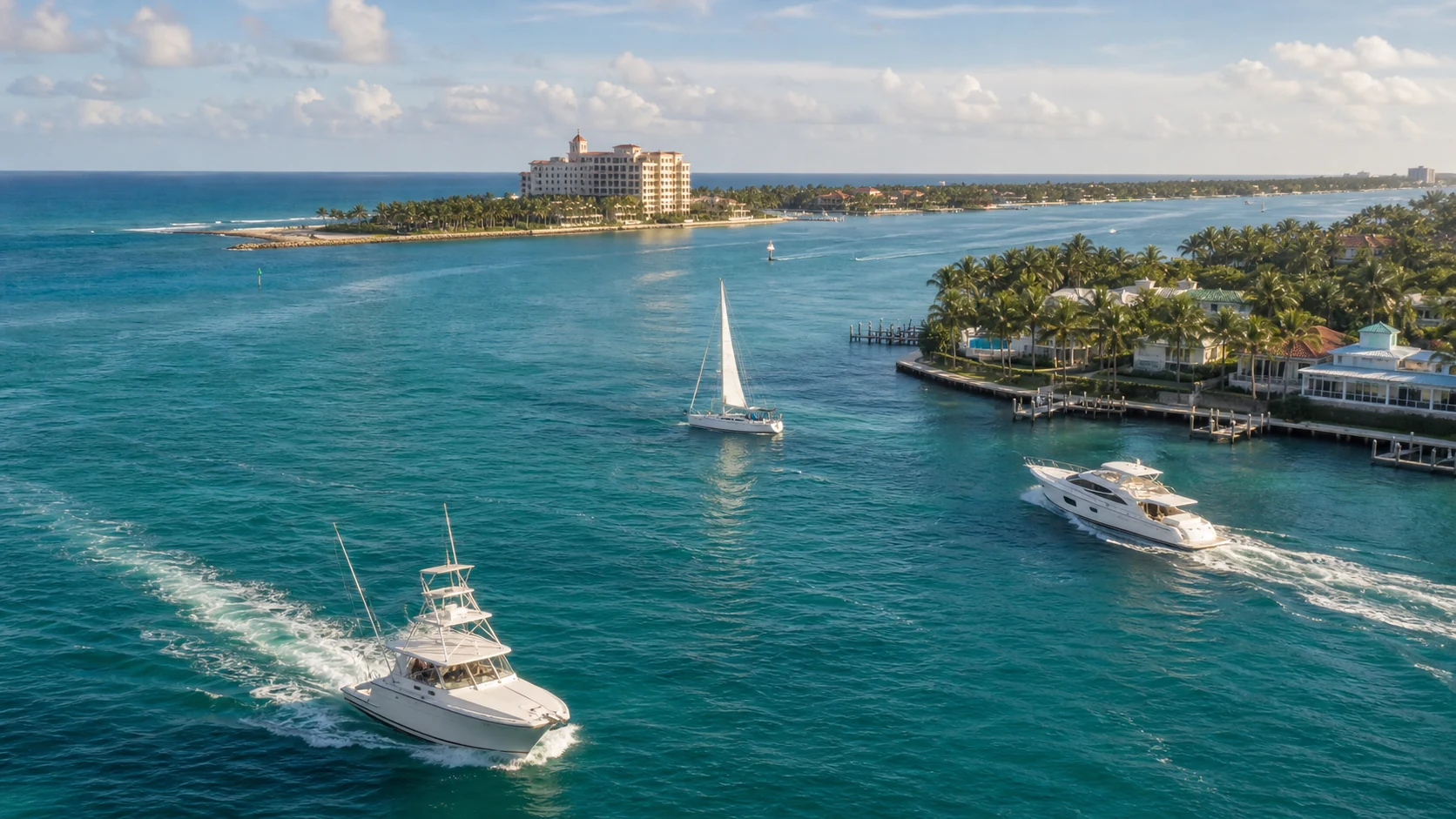
Recreational Boat Fire Protection in Palm Beach County
Marine Fire Protection Palm Beach provides fire-equipment inspections for recreational boats along the Palm Beach County coast. Request review of an installed engine-compartment system, portable marine fire extinguishers or both equipment groups for pre-cruise preparation, a sale, insurance documentation or a voluntary Vessel Safety Check.
Engine-Compartment and Extinguisher Inspections for Palm Beach County Boats
Recreational boats differ in length, propulsion layout, compartment design and installed equipment. An enclosed engine compartment may have a marine fire suppression system that should be considered separately from portable extinguishers carried aboard.
Owners should inventory both equipment groups before requesting service. Photographs of the installed cylinder, service tag, controls and engine compartment can help identify the system, while portable units should be documented individually.
Current official guidance should be used to determine applicable carriage requirements. An installed system should not be assumed to remove every portable-extinguisher obligation. A private inspection focuses on the equipment included in the request and does not guarantee a regulatory or insurance result.
Before local, coastal or offshore use, an owner may want to confirm that records are available and visible concerns have not been overlooked. Private inspection can support pre-cruise preparation without serving as an official government examination.
Do not pull a manual release, operate a control or discharge an extinguisher to prepare for service. Make equipment safely accessible and identify the person responsible for vessel entry.
Planning a cruise, sale or insurance review? Start with an inventory of the boat’s fire equipment.
Talk It ThroughKnow What Fire Equipment Is Aboard
A recreational boat may carry portable marine fire extinguishers as well as an installed engine-compartment fire suppression system. These equipment groups should be identified separately when arranging an inspection.
Installed Engine-Compartment System
Photograph readable labels, the installed cylinder, service tag, controls and protected compartment. State whether the boat has one engine enclosure or several machinery areas.
Portable Marine Fire Extinguishers
Document each portable unit individually and identify its onboard location. Portable equipment should not be assumed to be covered by the installed-system review.
Accurate Identification Matters
If the manufacturer or model is unknown, provide photographs of readable labels rather than assuming the system matches equipment found aboard a similar vessel.
Separate Records Help
Available records for installed and portable equipment can help describe the scope of a requested inspection. An unknown service date is also a practical reason to request review.
Prepare for a Recreational Boat Inspection in Palm Beach County
Gather the boat’s approximate length, actual location, installed-system information, portable-extinguisher count and last known records. Explain whether the request relates to cruising, a sale, insurance documentation or another review.
Boat Details
Provide the approximate length, actual location and the number of engine enclosures or machinery areas aboard.
Installed-System Information
Submit readable photographs of installed cylinders, service tags, controls and protected compartments when available.
Portable Equipment Count
List portable extinguishers individually and note where each unit is carried aboard the vessel.
Reason for Review
Let us know whether the inquiry is for pre-cruise preparation, a sale, insurance documentation, a Vessel Safety Check or another equipment review.
Private inspection is not the same as a Coast Guard examination or Coast Guard Auxiliary Vessel Safety Check.
Unknown records or uncertain equipment identification are useful details to mention when requesting service.
Review Boat InspectionsWhat a Recreational Boat Fire Inspection Can Help You Organize
An inspection request begins with the boat and the equipment aboard. Installed engine-compartment systems and portable marine fire extinguishers may both be included, but each group should be described clearly so the requested review can be understood.
Pre-Cruise Preparation
Before local, coastal or offshore use, owners may want to review available records and identify visible concerns that should not be overlooked.
Sale Preparation
An upcoming sale is a common reason to gather installed-system information, portable-extinguisher details and last known records.
Insurance Documentation
Explain when an inquiry relates to insurance documentation so the relevant equipment and available records can be identified.
Vessel Safety Check Preparation
Private equipment inspection can support preparation for a voluntary Vessel Safety Check, but it is not the same as that authorized program.
Make the Boat and Equipment Accessible
Before the visit, make the installed system and portable equipment safely accessible. Identify the person responsible for vessel entry and be prepared to provide the boat’s actual location.
Marina, boatyard and private-property permission remains the customer’s responsibility. Access planning is especially useful when equipment is located in an enclosed engine compartment or separate machinery area.
Do not pull a manual release, operate a control or discharge an extinguisher in preparation for service. Photographs of labels and equipment locations are more useful than assumptions about system type or age.
For boats with unknown service history, readable photographs of labels and tags can help identify the equipment included in the request. The completed inspection can establish information about the equipment and scope reviewed at that time.
When contacting Marine Fire Protection Palm Beach, include the approximate vessel length, installed-system details, portable-extinguisher count, actual location and the reason for the review.Marine Fire Protection Services for Recreational Boats
Recreational boat owners can request inspection of installed marine fire suppression systems, portable marine fire extinguishers or both equipment groups. The requested scope should reflect the equipment aboard and the reason for the review.
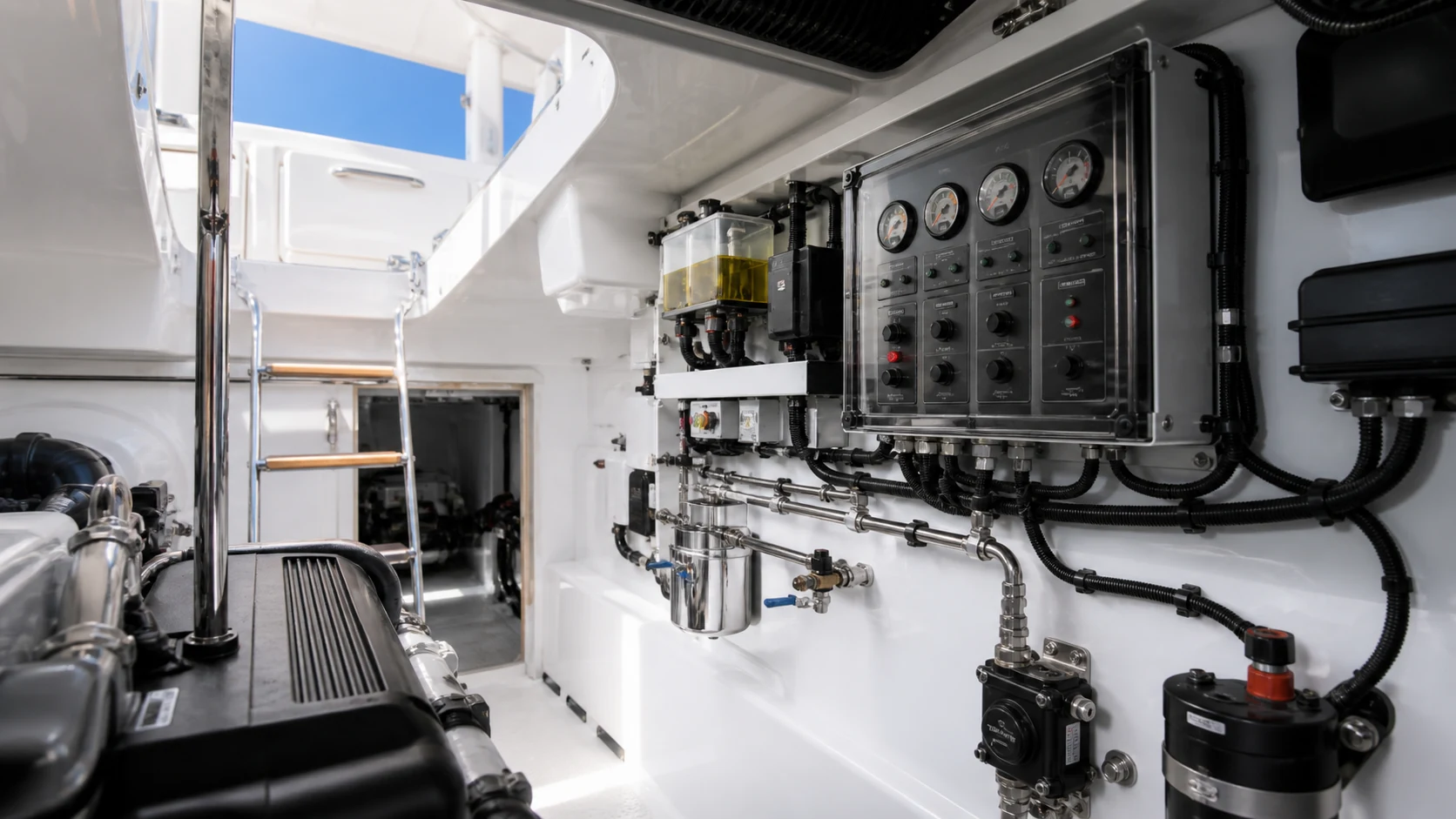
Boat Fire Suppression Inspections
Review installed engine-compartment fire suppression equipment and the available information for the protected space.
View service →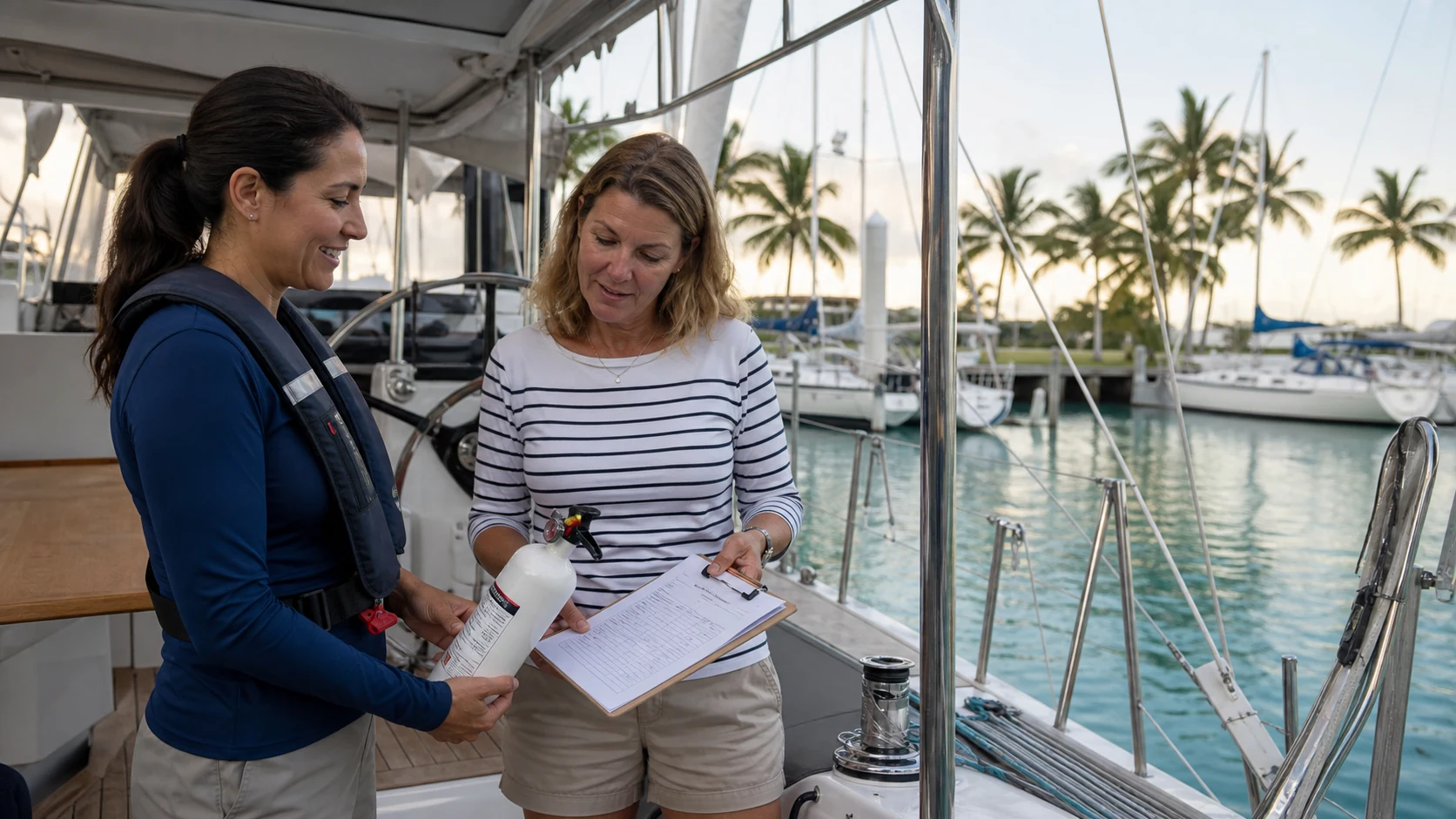
Marine Fire Extinguisher Inspections
Include portable marine fire extinguishers in the inquiry by listing each unit and its onboard location.
View service →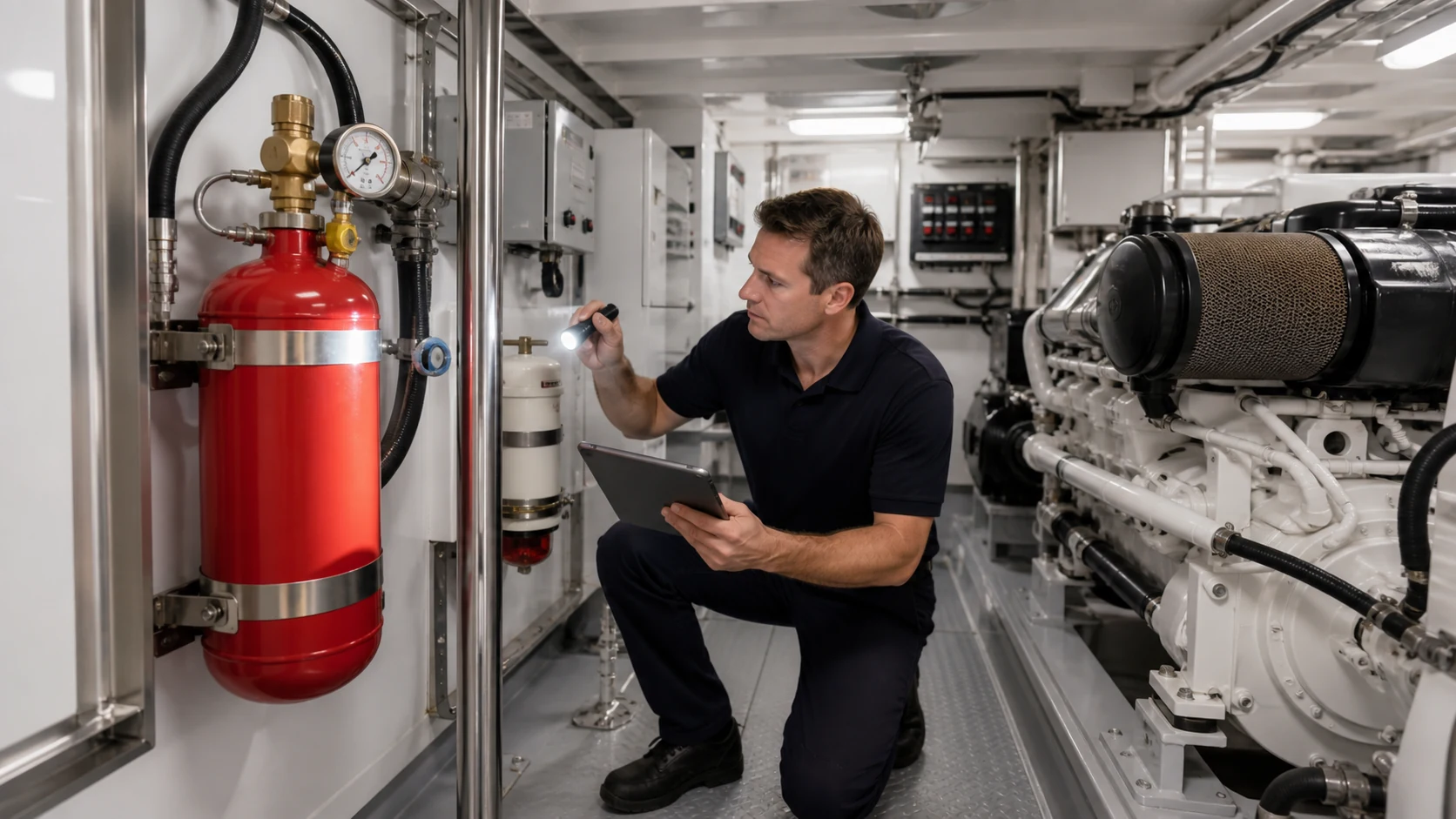
Engine-Room System Inspections
Request inspection focused on an installed system serving an enclosed engine compartment or machinery area.
View service →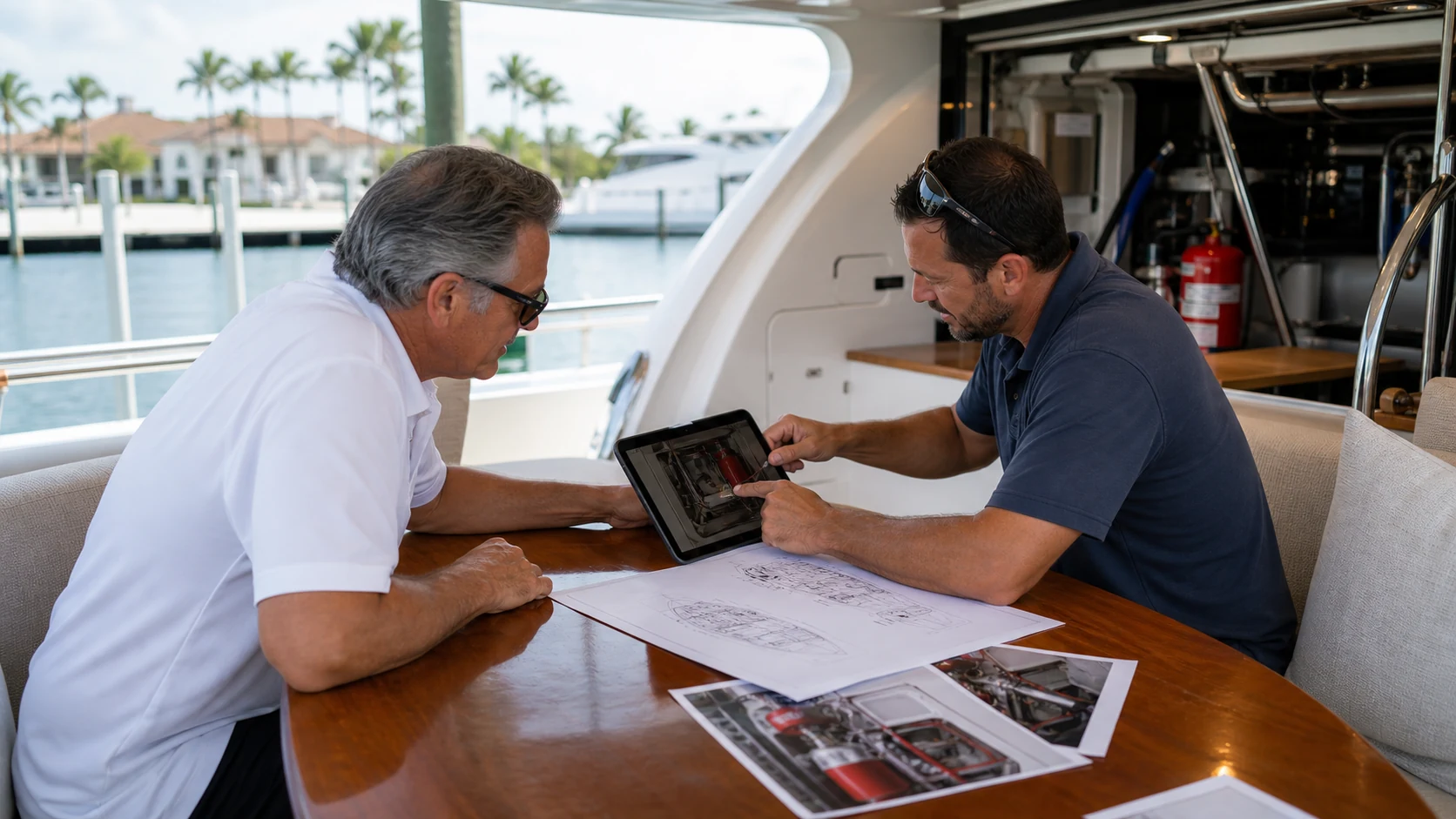
Marine Fire System Deficiency Evaluation
If a marine survey or insurance request identifies a fire-equipment concern, request a vessel-specific service evaluation.
View service →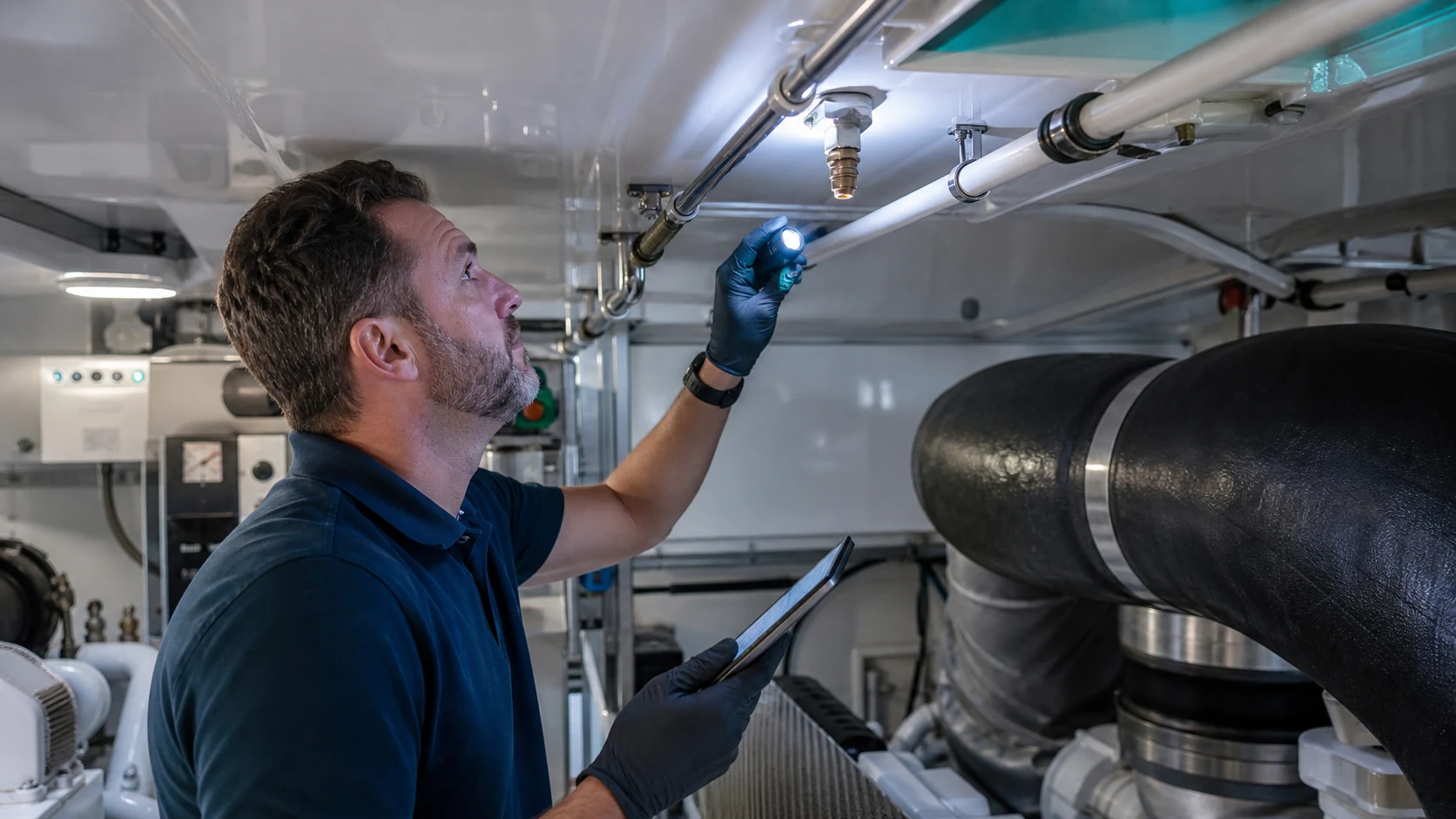
Inspection Documentation
Available records, service tags and photographs can help describe the equipment and the scope requested for review.
View service →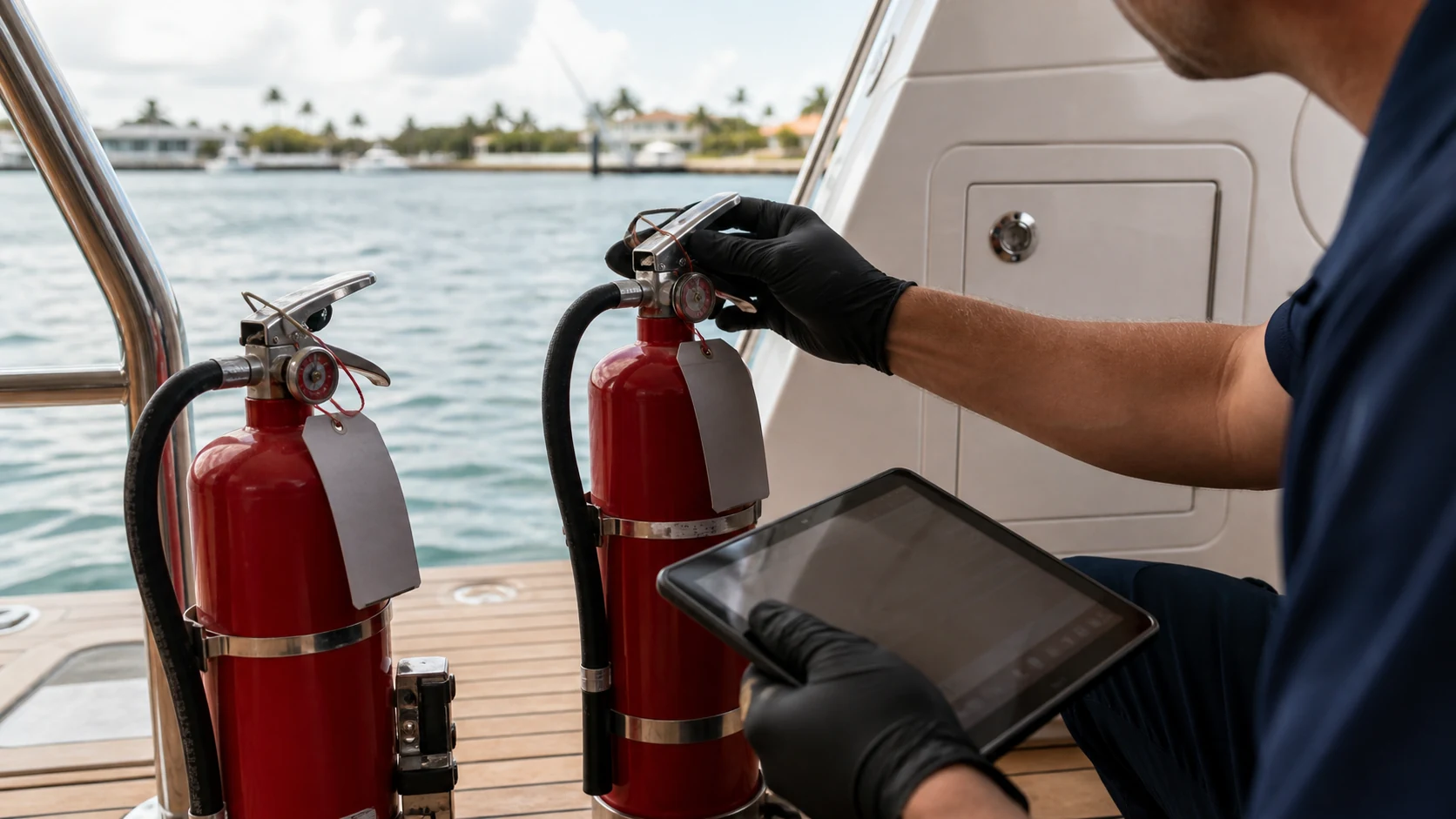
Marine Fire Suppression System Inspections
Review installed marine fire suppression equipment for the specific vessel and protected compartment identified in the inquiry.
View service →Recreational Boat Fire Inspection FAQs
Start With the Boat and Its Fire Equipment
Send the approximate boat length, actual location, installed-system information, portable-extinguisher count and available records. Marine Fire Protection Palm Beach can help you describe the recreational boat fire equipment included in your request.